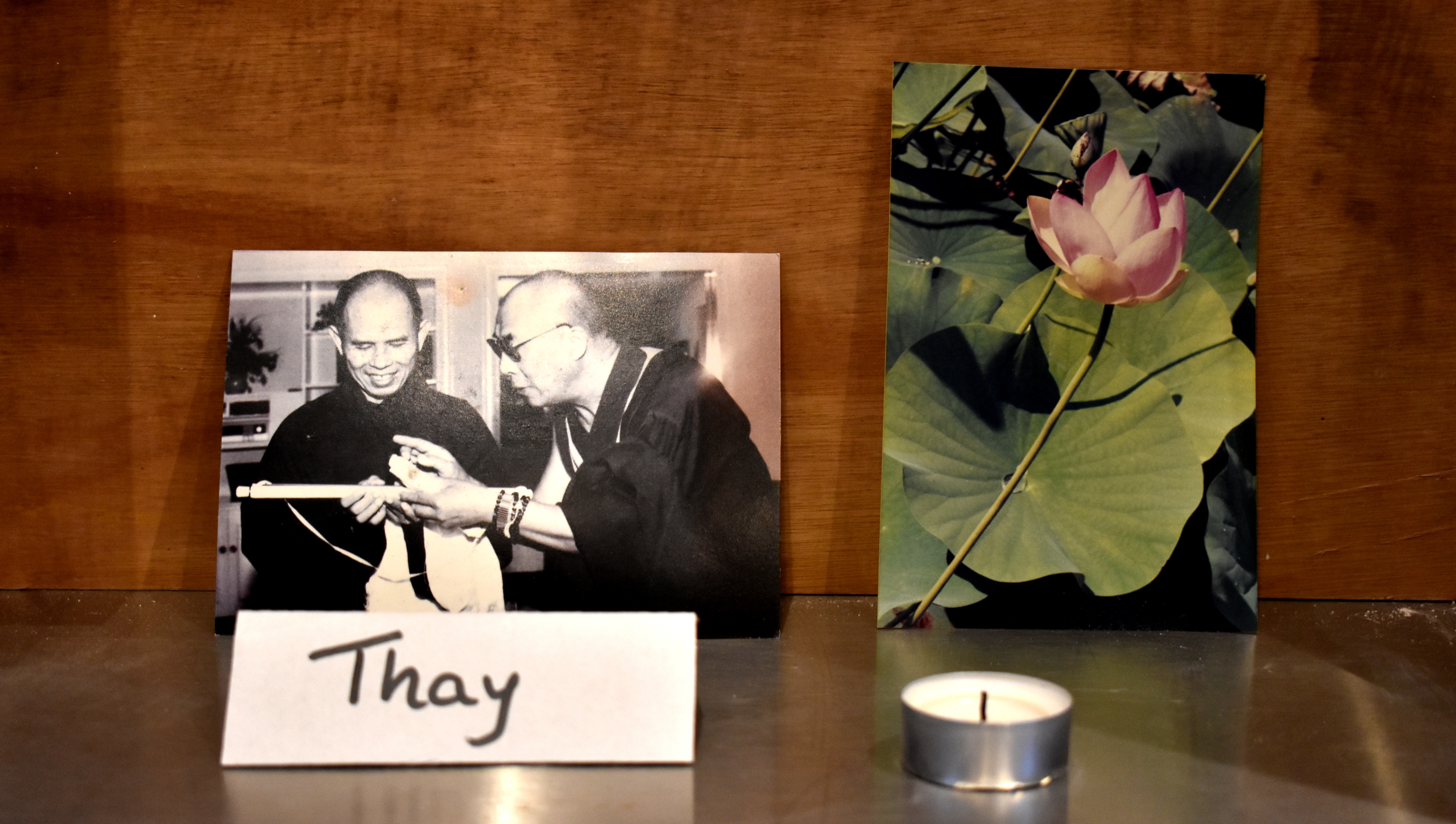
Thich Nhat Hanh (left) with the Dalai Lama (right)
Today is the anniversary of the death of Thich Nhat Hanh (Also known as Thay—Teacher in Vietnamese). Thay is a monk, poet, peace activist, and founder of the Plum Village tradition, which is what we practice within here at Being Peace. We also call today Thay's continuation day, as his presence and teachings continue to emenate within the whole Plum Village tradition.
Today we are enjoying a Day of Mindfulness; this morning we watched A Cloud Never Dies, a documentary on Thay's life, as well as a recorded Dharma talk from Thay. This afternoon we practiced Touching the Earth, prostrating to honour our ancestors and decendents. I feel incredibly grateful to call Thay my spiritual ancestor; I feel that I've learned
Today, I wanted to write about the practice of mindfulness, as it is at the very core of Thay's life and teaching. The impact of Thay's teaching in the world can be seen clearly in the popularity of mindfulness today—he has even been described as 'The father of mindfulness' in the Irish Times. One of his most famous books is The Miracle of Mindfulness, which I would recommend to anyone interested in the practice of mindfulness.
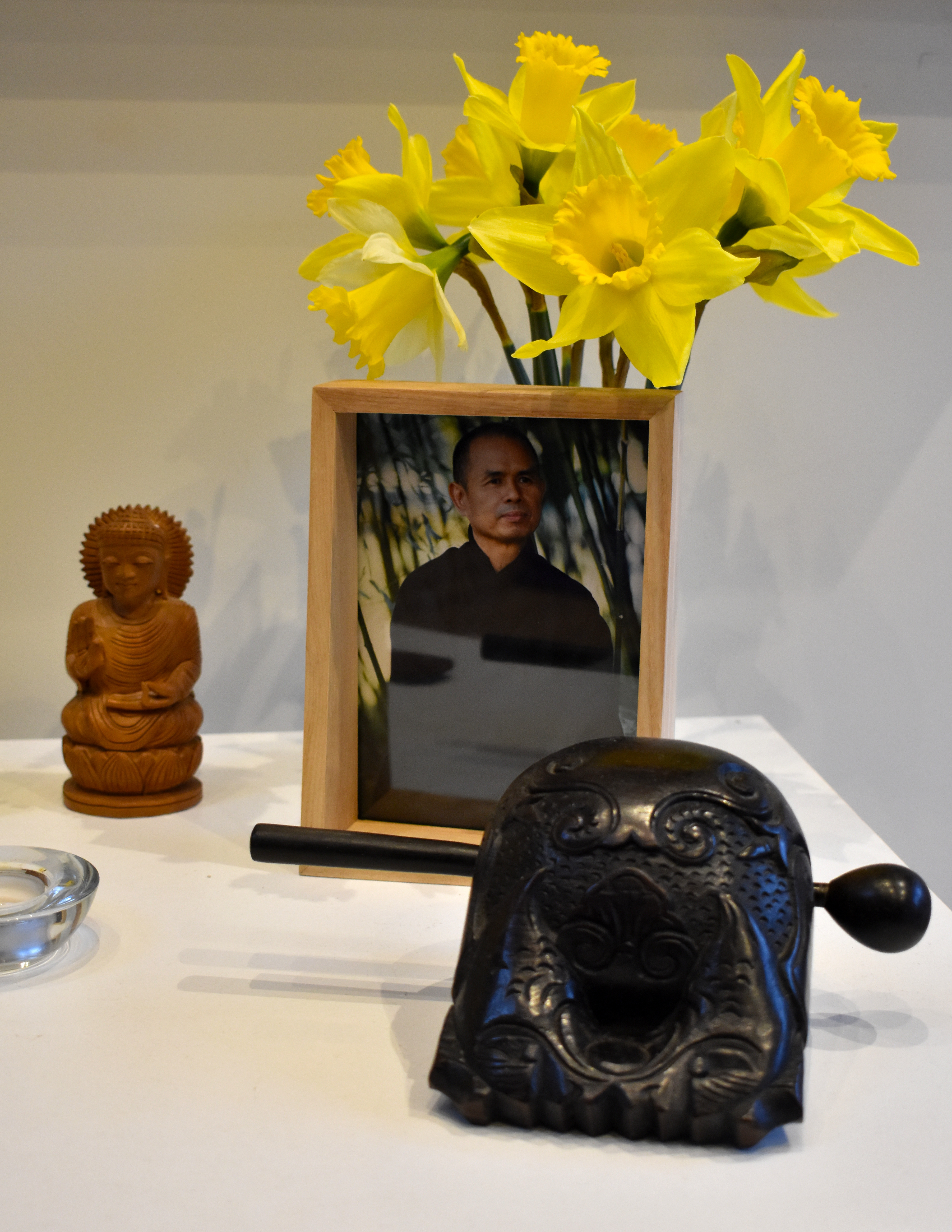
Thay on the ancestor altar
What is Mindfulness?
'Mindfulness is to be aware of what is going on, and everyone is capable of being mindful. When you breathe in, and if you know that you are breathing in, that is called mindfulness of breathing.' —Thich Nhat Hanh
Thay offers this simple definition of mindfulness (smrti in Sanskrit; sati in Pali), 'to be aware of what is going on'. Typically, this is practiced through formal meditation practices: such as sitting meditation, where the object of mindfulness may be the breath; or walking meditation, where we are aware of each step. Thay has expanded the practice of mindfulness to embrace all areas of daily life, such as Gathas, short poems that we recite while carrying out daily tasks to remind us to be mindful. For example, this week we are focusing on the follow gatha, which we recite whenever we hear the sound of the bell:
- Listen, listen
- This wonderful sound
- Brings me back
- To my true home
I particularly enjoy mindfulness while washing the dishes, where the aim is to 'be completely aware of the fact that one is washing the dishes.' Standing at the sink with my hands in the warm soapy water is a wonderful experience! I can take my time lovingly cleaning each dish, and being in touch with this joy, I can 'wash the dishes in order to wash the dishes.'
What's the Point?
Why do we put so much emphasis on being aware of simple tasks like sitting, walking, and washing the dishes? For me, I remember while listening to The Way Out is In (the Plum Village podcast) hearing Sister True Dedication joyfully sharing Thay's urgent message: This life is a Miracle.
Mindfulness allows us to live completely in the present moment: to really enjoy life when things are good; and to take care of ourselves when things are bad. Our practice is not only to be aware of every moment, but to enjoy every moment as well. Returning to the example of washing the dishes, in The Miracle of Mindfulness, Thay offers:
'At first glance, that might seem a little silly: why put so much stress on a simple thing? But that's precisely the point. The fact that I am standing there and washing these bowls is a wondrous reality. I'm being completely myself, following my breath, conscious of my presence, and conscious of my thoughts and actions.'
As I wash the dishes, I like to imagine that I am washing a baby Buddha, bringing reverence and care into my time at the sink. When my mindfulness is strong, I can live deeply in the present moment with whatever I am doing. Free from the past's regrets or the future's worries, I am able to feel truly alive in my life, and so I enjoy feeling complete freedom in the present moment. I think Thay sums it up best:
'Mindfulness allows you to live deeply every moment that is given you to live.'