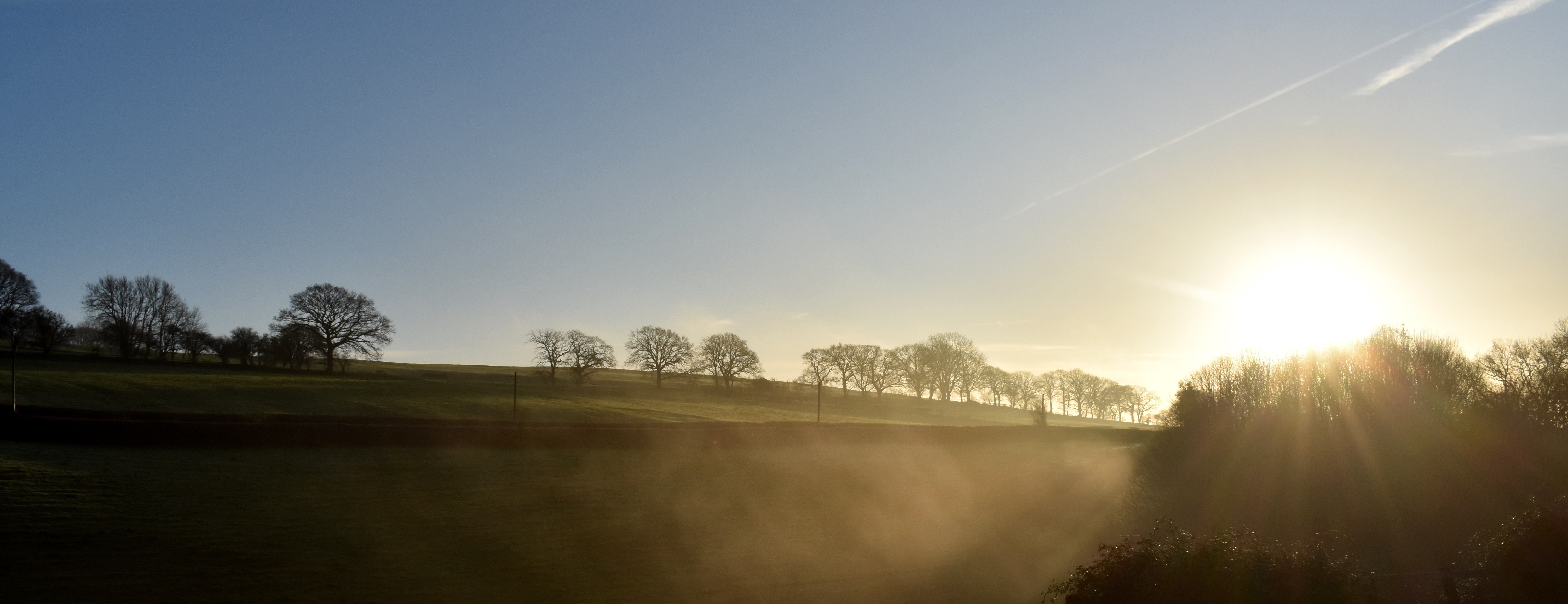
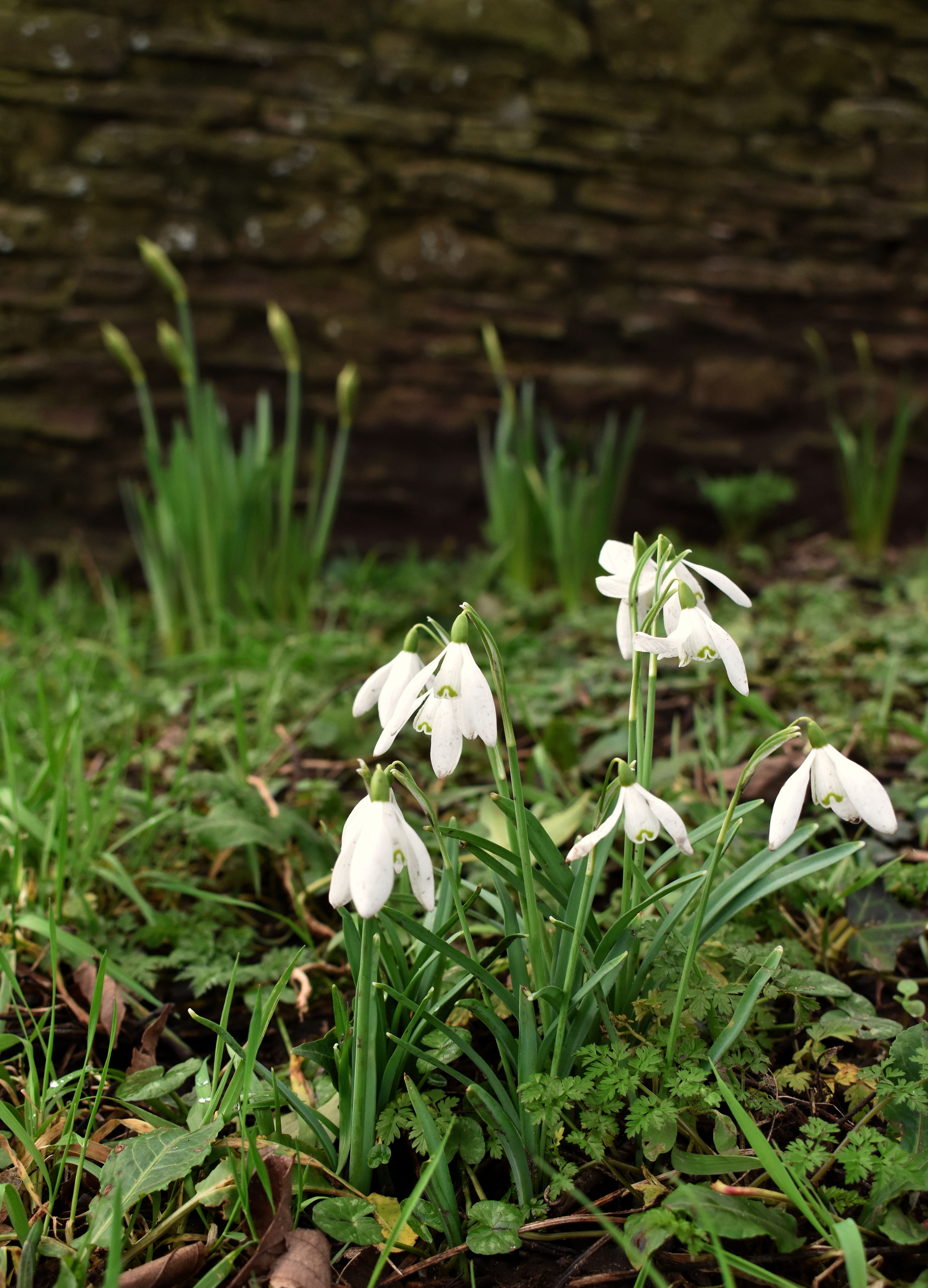
Happy Imbolc to you all! Today marks the start of spring—possibly my favourite season. All over the land here I've been seeing snowdrops emergings and daffodils beginning to wake up. Last night was also a full moon, so I hope that implies an auspicious springtime ahead!
Finding the Quakers
N.B. This page refers to Quakers in Britain. Quakerism in other parts of the world can vary.
Today I would like to share with you the story of my relationship with the Quakers. The story begins while I was at university, at my local Buddhist centre, where I was a regular member of their young persons' group. After a few years of regular practice with this group of lovely people, I found great refuge in the sangha there. Studying at university certainly brings some stress and diffuculties, so relying on this refuge made it much more managable, and supported my practice greatly.
When summer came, and I graduated from university, I found myself back at home without a local sangha. My nearest Buddhist groups were at least a 30 minute drive away (as opposed to the 10 minute walk I had at university), so regular attendance became very difficult. What surprised me was the great sense of lack that I felt, being divorced from a spiritual community. Of course, I continued my practice on my own, and occasionally joined sanghas in person, but I still felt that I missed belonging to a local group dedicated to peace.
One sunny Sunday morning, I found myself outside of a Quaker meeting house. As I saw others being greeted and entering through the grand wooden door, I decided to join in. Knowing very little about Quaker faith and practice at the time, I was happy to be welcomed in with many warm smiles, and a gentle explaination of Quakerism.
Who are the Quakers?
Quakers are a spiritual community with historic roots in Christianity—officially known as the Religious Society of Friends. According to their website, they are best known for their 'silent worship', and their 'work for peace and justice'.
Quaker Faith
Quakers can be characterised by their four testimonies, which I paraphrase here from their page on Quaker faith:
- Simplicity
- Living a simple live, focusing on what really matters.
- Truth
- Connecting to the deepest truths through silent worship; speaking and living with honesty.
- Equality
- Each person carries divinity within—all people are to be treated with respect.
- Peace
- Quakers are famous for their history of peace work; 'It comes from our belief that love is at the centre of existance'.
Personally, my favourite aspect of Quakerism is their openess to people of all faiths and none. While the tradition originated from a Christian group, Quakers today may or may not identify as Christian. In my experience as a Plum Village practitioner, I have felt nothing but welcomed and at home in Quaker spaces, even more so than other Christian groups. This reflects the Quaker belief, which I similarly hold and honour, that there is 'that of God in everyone'.
Quaker Practice
At the heart of Quakerism are Quaker meetings, where people gather together and sit in silence for an hour. The Bible and Quaker faith & practice are also available to read quietly. The meeting is completely egalitarian—there are no priests, ministers, or ordained persons—everyone is welcome to give ministry.
Within the silence, Quakers sit with open hearts and search for connection, which may move someone to speak. During this ministry, someone stands and speaks from the heart, and others listen deeply to them, contemplating what it means to them.
In my experience, I have been deeply touched by listening to Quakers (who often belong to an older generation than my own) express their heartfelt concerns about global events, and their aspiration for peace in the world. Usually in society it is rare to hear people, especially strangers, speak their minds so honestly and authentically—I find it extremely refreshing to know that we are not alone in these concerns and wishes.
Quakerism and Buddhism
Upon learning more about Quakers, I was surprised by how similar their practice of silent worship is to meditation in the Zen tradition. The two practices appear almost identical—simply sitting in silence with others. There's certainly something beautiful to me that two spiritual traditions with very different roots can independently discover meaning in just sitting.
However, reading books and giving talks during a period of meditation would be very unorthodox. On the other hand, in the Plum Village tradition, we have a practice called Dharma Sharing, in which we sit together in silence, and people will speak from the heart while others listen deeply... Almost identical to a Quaker meeting! Although to be fair, in my experience the emphasis is different—Dharma Sharing focuses on what people share, with silence enjoyed in between; Quaker meetings focus on the silence, which may be wonderfully interupted by ministry. I think that this is because in Plum Village, we have plenty of meditation time spent contemplating in silence, and Dharma Sharing is our opportunity to freely share with others.
Outside of formal practices, I also take joy that both the Quakers and Plum Village are renowned for their histories of tirelessly working for peace, always opposed to violence and intolerance. Both traditions are beautifully open to learn from faiths and cultures other than their own. Anecdotally, I've heard that Quakers and Plum Village practitioners overlap in interfaith and peace spaces. I deeply hope that Being Peace—the first Plum Village centre in the UK—can enable stronger bonds between Quakers and Plum Village in the UK, and more broadly, between Christians and Buddhists everywhere.
I am filled with respect and admiration for Quakers—knowing that this tradition works so tirelessly for peace and equality, and gives meaning and connection to many peoples' lives, brings me faith in the goodness of people and the world. While I was only around Quaker spaces for a short time between my graduation and my new life at Being Peace, I think fondly of the time I spent in quiet contemplation with my local Quakers. They fulfilled my yearning for a local sangha (albeit not a Buddhist one), and taught me so much more about the spiritual traditions present in Britain.
If you have been inspired by my experience of Quakerism, I urge you to find your local Quaker meeting, and just try it out. There's also much to be said about the simple pleasure of making one's way to a meeting house early on a Sunday morning, and enjoying a cup of tea or coffee with others afterwards.